MATERIALS RECOVERY
FACILITY (MRF)
The Materials Recovery Facility (MRF) is the heart of recycling operations in Baldwin County. This advanced facility is where recyclable materials are sorted, processed, and prepared to be transformed into new products.
Opened on March 20, the approximately 62,000-square-foot facility represents a $25 million investment in the future of sustainable waste management. Located at 15101 Terra Bella Drive in Summerdale, the MRF is designed to process up to 40,000 tons of recyclables annually.
Using advanced sorting technology, the facility separates plastics, paper, metals, and cardboard into clean material streams that are baled and sold to recycling end markets. This process allows materials to be reused in manufacturing, reducing landfill waste and supporting a more sustainable local economy.
By separating recyclables into usable streams, the MRF helps ensure that the items you place in your bin can be successfully reused and repurposed.
THE GREEN MACHINE
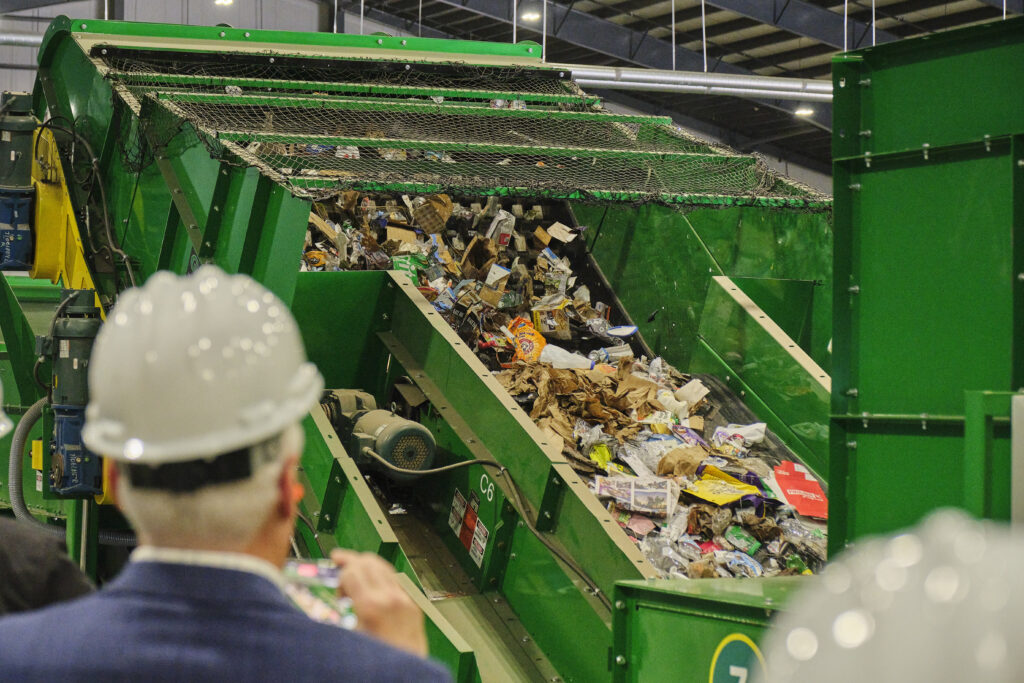
Made in the USA, at the center of the MRF is our state-of-the-art sort line, “The Green Machine,” a system that uses a combination of advanced technologies to efficiently separate materials.
HOW RECYCLING MOVES THROUGH THE MRF
TIPPING FLOOR
Recyclables arrive at the facility and are loaded onto the system by a loader operator. Materials are placed onto a conveyor and pass through a metering drum, which spreads everything out evenly to prepare for sorting.
PRESORT & REMOVAL OF CONTAMINANTS
As materials move along the line, our team removes items that do not belong in the recycling stream, such as trash, plastic film, and bulky debris. These contaminants are separated into designated bunkers to protect equipment and ensure a cleaner recycling process.
From there, materials move onto a specialized screen that separates large cardboard from smaller items like containers, paper, glass, and cans.
CARDBOARD SORTING
Cardboard is separated early in the process and sent across a dedicated line. Additional sorting ensures any remaining contaminants are removed before the cardboard is collected, compacted, and prepared for recycling.
GLASS RECOVERY
Glass materials are screened out and directed to a glass breaker system, where they are crushed and separated into their own stream for proper handling and recycling.
PAPER & CONTAINER SEPARATION
Paper is separated from containers using a series of screens. It then passes through advanced optical sorting technology and a final quality check to remove any remaining contaminants before being prepared for baling.
Containers continue through the system, where additional screening removes any leftover paper.
PLASTIC SORTING (PET AND HDPE)
Plastics are sorted using optical technology and manual quality checks. PET plastics (#1) are separated first, followed by HDPE plastics (#2). Remaining materials continue through the system for further processing.
METAL SEPARATION
Metals are removed using specialized equipment. Steel (tin) is separated using magnets, while aluminum is separated using an eddy current system. Final hand-sorting ensures only clean materials move forward.
FINAL SORTING & QUALITY CONTROL
Additional optical sorting separates remaining materials, including polypropylene (#5) and cartons. Each material type is directed into its own storage area, ready for processing.
BAILING & END USE
In the final step, all sorted materials are compressed into high-density bales. These bales are then shipped to manufacturers, where they are turned into new products and reintroduced into the marketplace.
ACCEPTED MATERIALS
The MRF is designed to process common household recyclables collected through curbside and drop-off programs. These materials are sorted and prepared for reuse.
| # | Type | Full Name | Common Products | Recycled Into |
|---|---|---|---|---|
| 1 | PETE | Polyethylene Terephthalate | Soda & water bottles, cups, jars, trays, clamshells | Clothing, carpet, clamshells, soda & water bottles |
| 2 | HDPE | High-Density Polyethylene | Milk jugs, detergent & shampoo bottles, flower pots, grocery bags | Detergent bottles, flower pots, crates, pipe, decking |
| 3 | PVC | Polyvinyl Chloride | Cleaning supply jugs, pool liners, twine, sheeting, automotive product bottles | Pipe, wall siding, binders, carpet backing, flooring |
| 4 | LDPE | Low-Density Polyethylene | Bread bags, paper towel overwrap, squeeze bottles, trash bags, six-pack rings | Trash bags, plastic lumber, furniture, shipping envelopes, compost bins |
| 5 | PP | Polypropylene | Yogurt tubs, cups, juice bottles, straws, hangers, shipping bags | Paint cans, auto parts, food containers, hangers, plant pots |
| 6 | PS | Polystyrene | To-go containers, flatware, hot cups, razors, CD cases, cartons | Picture frames, molding, rulers, flower pots, toys |
| 7 | OTHER | Other Plastics | Polycarbonate, nylon, ABS, acrylic, PLA; bottles, safety glasses, CDs | Electronic housings, auto parts |
Aluminium
Aluminium cans and containers such as soda cans, beverage cans, and food tins. Please make sure items are empty and lightly rinsed.
Steel (Tin Cans)
Steel cans, including food containers such as soup, vegetables, and pet food cans. Labels can remain on, but containers should be empty and rinsed.
Paper & Cardboard (Fibers)
Newspapers, magazines, office paper, mail, paperboard (such as cereal and cracker boxes), and flattened cardboard boxes. Keeping cardboard flattened helps improve collection and processing efficiency.
WASTE & RECYCLING ADVENTURE CENTER
The MRF is more than a processing facility. It is also a place for learning and community engagement.
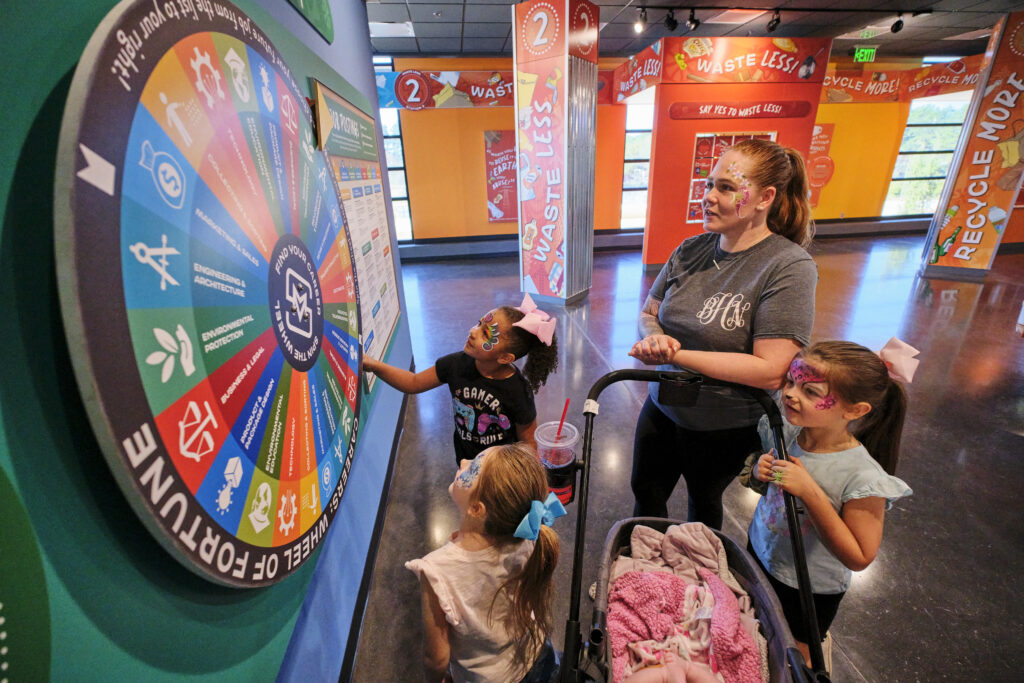
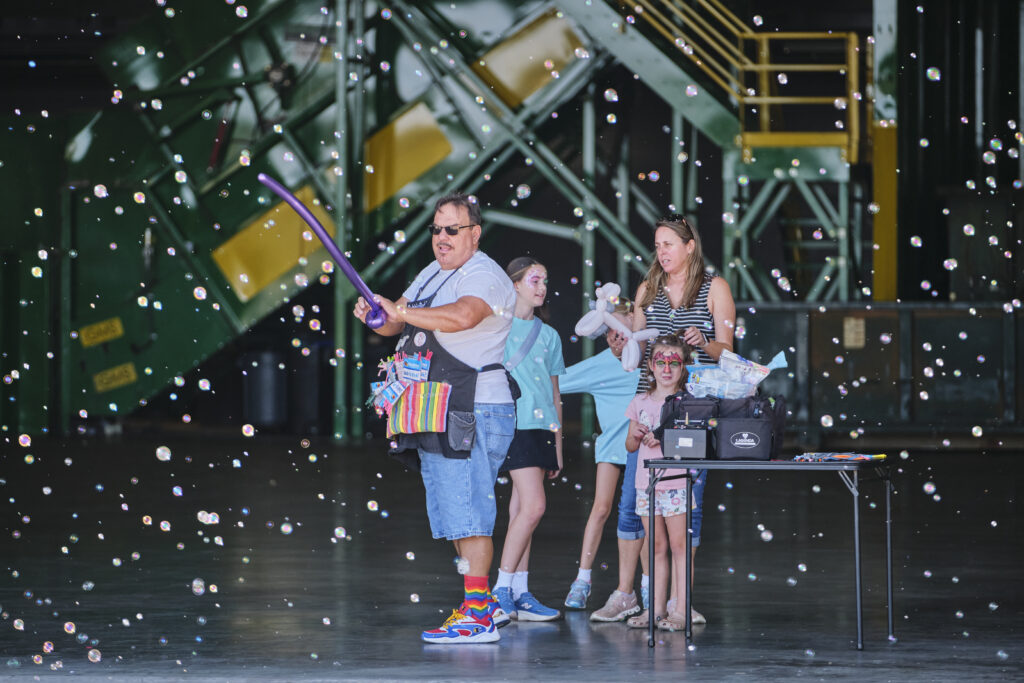
Our Waste and Recycling Adventure Center offers hands-on educational experiences for students, organizations, and community groups. Visitors can explore how recycling works, learn about responsible waste management, and see firsthand how their everyday actions make a difference.
Since opening, the center has welcomed thousands of visitors and continues to serve as a valuable resource for environmental education in Baldwin County.
Visitors can engage with exhibits that highlight our locations and services across Baldwin County, while also viewing the Green Machine in action from a dedicated observation area. Originally designed to support 5th and 10th grade learning standards, the center is accessible, engaging, and educational for visitors of all ages.
CHaRM FACILITY
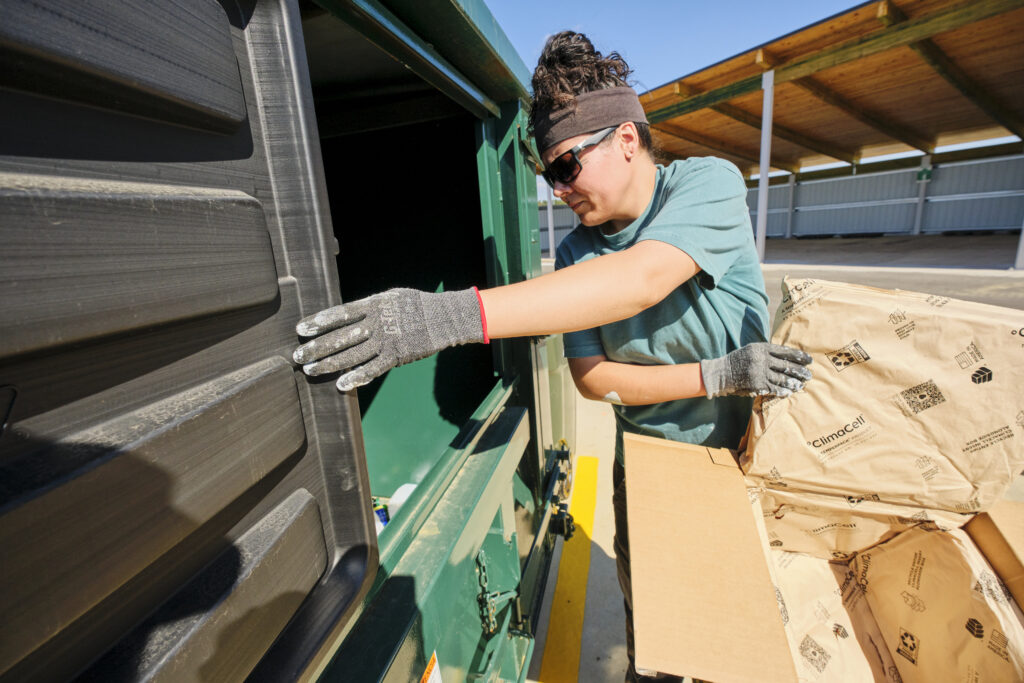
Located directly behind the MRF, our Center for Hard-to-Recycle Materials (CHaRM) provides a solution for items that cannot be processed through traditional curbside recycling.
From electronics and batteries to paint, propane tanks, lightbulbs, and household hazardous waste, the CHaRM ensures these materials are handled safely and responsibly.
Together, the MRF and CHaRM create a more complete recycling system, giving residents multiple options to reduce waste and protect the environment.
THE ART OF RECYCLING
A Visual Journey
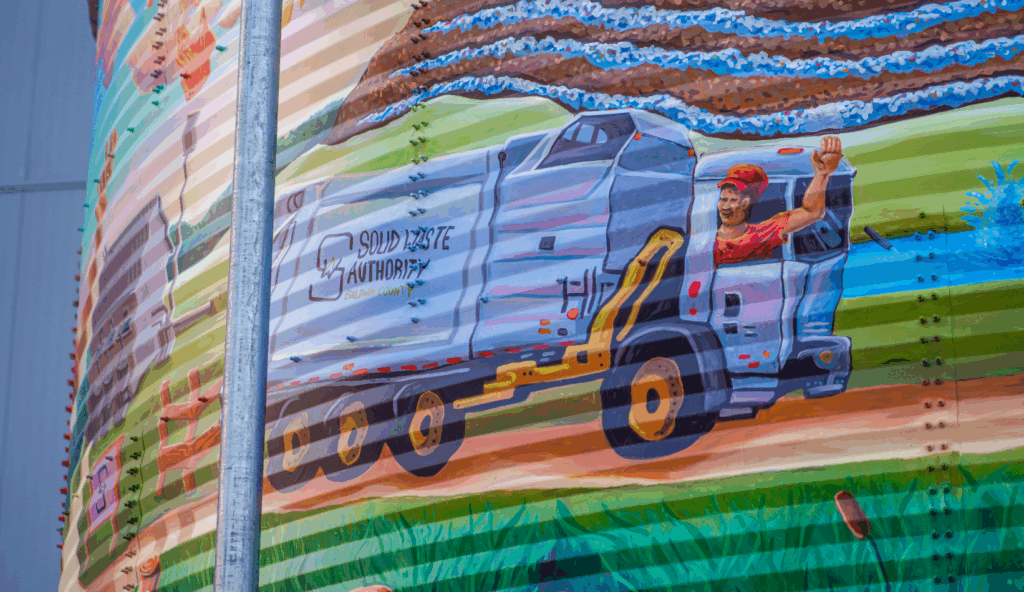
Painted on a corrugated metal water tank at our MRF, this vibrant mural tells the story of waste, recycling, and sustainability.
Through playful, symbolic imagery, it follows the journey of materials from home to landfill, through processing, and back into the community. Scenes of recycling, environmental protection, and education highlight how waste is managed and transformed.
More than just artwork, the mural is a reminder that every resident plays a role in protecting our environment and building a more sustainable future.
OUR COMMITMENT
The Materials Recovery Facility represents our commitment to innovation, sustainability, and service. By investing in advanced infrastructure and community education, we are building a cleaner, more efficient future for Baldwin County.